"AI agent" is everywhere right now, but what does it actually mean for a business? Here is a plain-English explanation.
Automation, chatbot or agent?
Automation
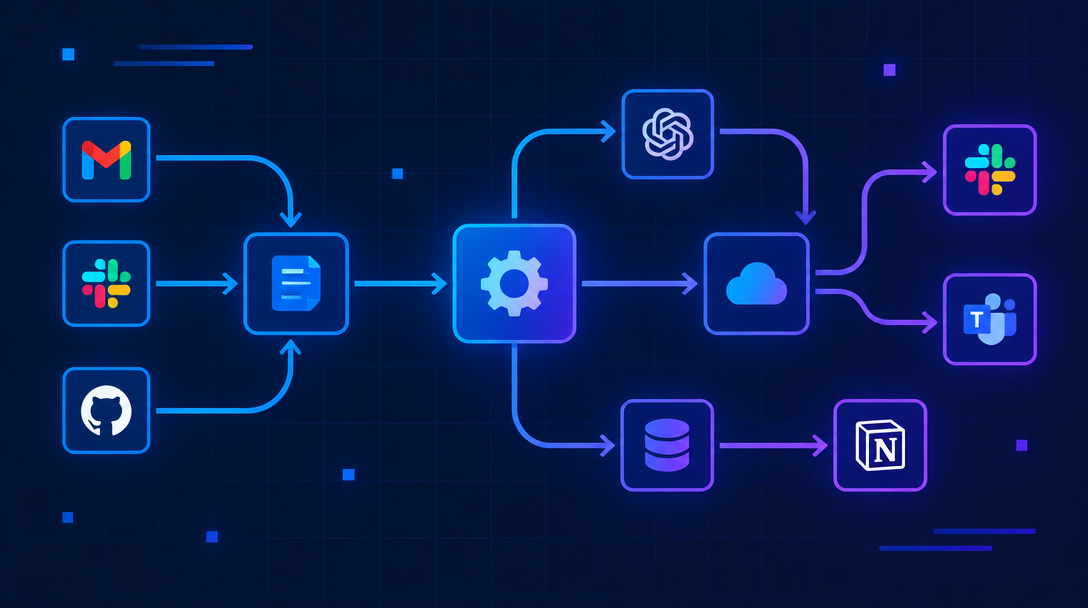
A fixed set of rules: when X happens, do Y. Reliable and predictable, but it can't handle situations it wasn't built for.
Chatbot
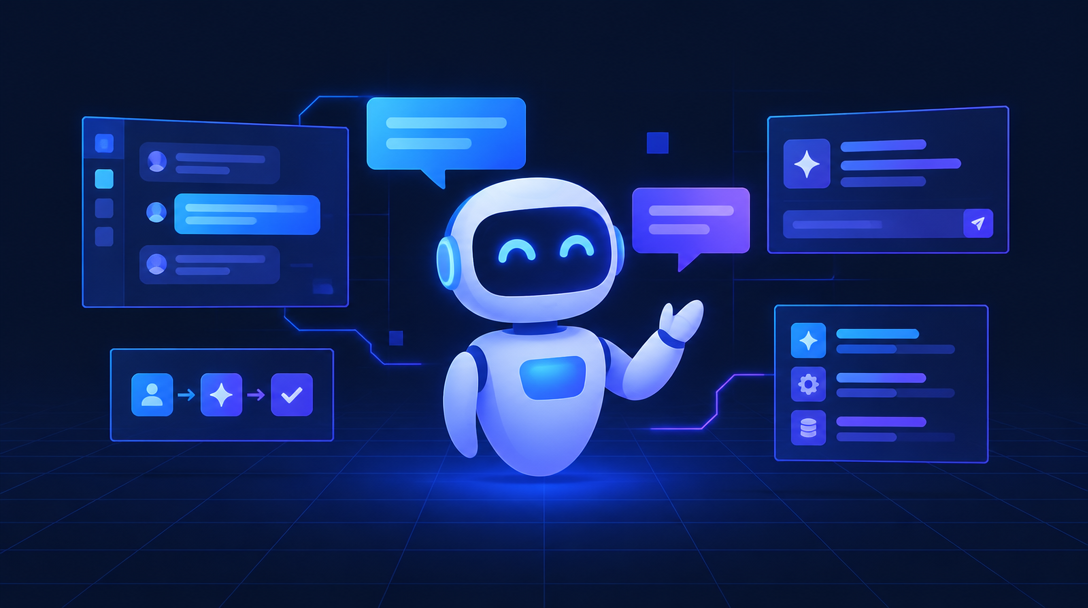
Answers questions in a conversation. Modern chatbots use AI to understand language, but they mostly talk.
AI agent
An agent can read a situation, decide what to do and take action using tools: searching your CRM, sending an email, booking a meeting or updating a sheet.
What an agent looks like in practice
Imagine a new enquiry arrives. An agent could:
- Read the message and understand the need
- Look up the company and check if it's already a customer
- Score the lead against your ideal customer
- Draft a personal reply
- Book a call or alert a salesperson
Each step uses a tool, and the agent decides which tool to use next.
Where agents help most
- Lead qualification: reading and scoring enquiries
- Support: answering from your knowledge base and opening tickets
- Research: collecting information before a sales call
- Operations: routing requests to the right person
Keeping agents safe
Limit their tools
An agent should only have access to what it truly needs.
Add human checkpoints
For anything that costs money or reaches a customer, add an approval step at first.
Log everything
Keep a record of what the agent did and why, so you can review and improve it.
Multi-agent workflows
Complex jobs can be split between several agents: one researches, one writes, one checks. Tools like n8n make this practical.
Start with one agent doing one job well.
Next step
Curious where an AI agent fits in your business? Request a free automation audit and we'll point to the best first use.